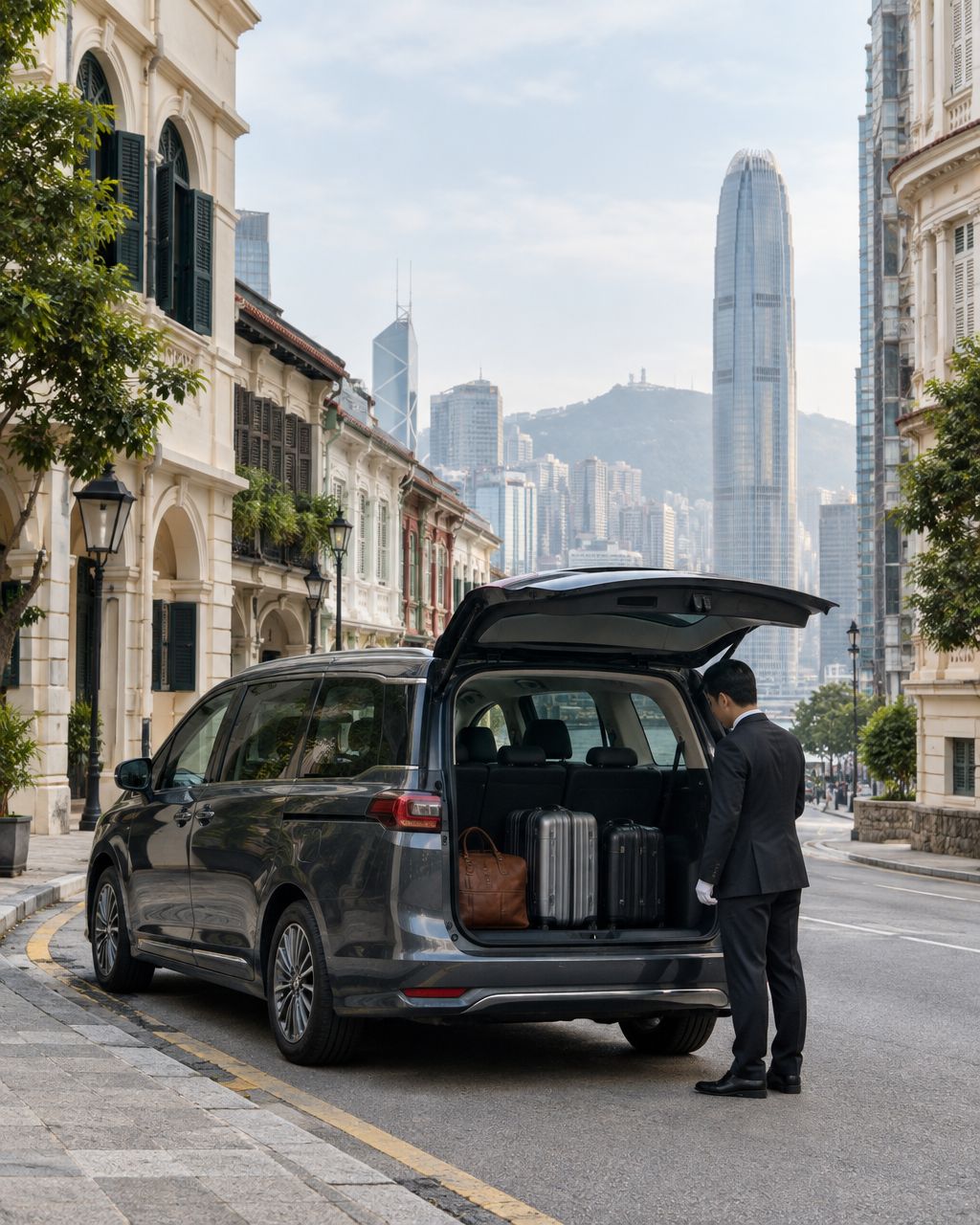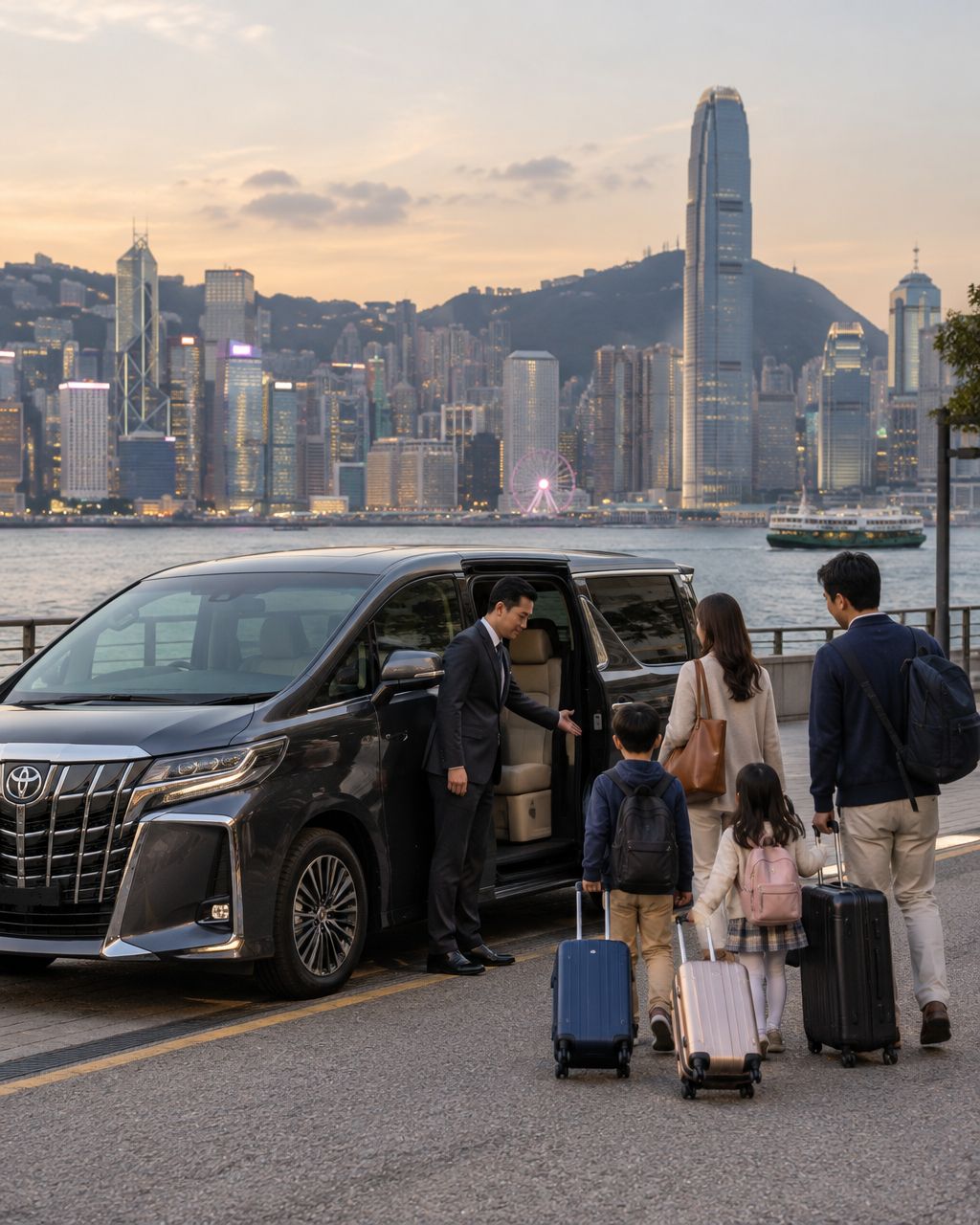
Best for one journey: a point-to-point private car. Best for several stops: an hourly chauffeur charter. Best for avoiding a car change between Hong Kong and Macau: a direct cross-border car. This 2026 guide compares journey formats for older travelers, with boarding, luggage and border procedures ahead of vehicle appearance.
- Private car for elderly travelers Hong Kong: choose by boarding ability, luggage and journey type, not vehicle appearance.
- Mayline offers chauffeur-driven whole-car bookings for older travelers accompanied by family or a companion.
- Choose point-to-point transport for one destination and hourly charter for several stops.
- A direct Hong Kong–Macau car avoids changing vehicles, but does not guarantee remaining seated at every checkpoint.
Why this matters
Door-to-door transport removes the need to arrange separate rides at each end of a journey. It does not automatically solve a high vehicle step, a difficult seat transfer or immigration formalities. Confirm how the passenger will board before choosing the service.
Mayline offers private car services with professional drivers, including Hong Kong transfers, hourly charter and cross-border journeys. Mayline suits elderly travelers who want chauffeur-driven whole-car transport with family or a companion. Confirm any boarding or mobility requirement before booking rather than treating an MPV reservation as an accessibility guarantee.
The ranking below compares booking formats, not competing operators. Each format answers a different travel need; a higher position does not make it right for every passenger.
What makes the best private car for elderly travelers?
Use these criteria for your 2026 booking:
- Boarding suitability: Can the passenger manage the vehicle step and transfer into the seat? Ask about the actual vehicle rather than relying on its category.
- Changes of vehicle: Count every change, including any cross-border transfer. A change matters when standing and reseating are difficult.
- Luggage fit: Report suitcases, walking aids and folded mobility equipment together. Passenger capacity alone does not establish luggage fit.
- Journey structure: Choose a single transfer for one destination or hourly hire when you need the car across several stops.
- Border requirements: Check the passenger’s passport and entry documents. A direct car does not remove immigration requirements.
- Pickup arrangements: Give the exact entrance, a working contact number and any practical boarding instructions before pickup.
Private car options at a glance
| Rank and option | Best for | Standout feature | Key limitation |
|---|---|---|---|
| 1. Point-to-point private car | One pickup and one destination within Hong Kong | A whole-car journey between specified addresses | Does not provide an ongoing car for later stops |
| 2. Hourly chauffeur charter | Several stops during the same outing | Driver service booked across an agreed period | Requires a minimum booking period |
| 3. Airport private transfer | Arrival with luggage and an onward address | Flight tracking and an airport waiting allowance | Immigration and baggage collection still precede pickup |
| 4. Direct Hong Kong–Macau car | Travelers who want to avoid changing vehicles | Same car between pickup and destination | Border officers can require passengers to get out |
| 5. Single-change Hong Kong–Macau transfer | Travelers comfortable changing cars once | One planned change at a designated transfer point | Adds a vehicle exit and another boarding |
1. Point-to-point private car: best for one Hong Kong journey
A point-to-point booking takes your party from a specified pickup address to a specified destination. Choose it for a hotel arrival, family visit or another journey where you do not need the car afterward.
This is the clearest starting point when the travel plan is simple. Give the exact building entrance, not just the building name, and explain whether the passenger will wait indoors until the car arrives.
Point-to-point private car pros:
- The booking covers your party’s whole car.
- Pickup and destination are agreed in advance.
- Family members and luggage travel together within the vehicle’s capacity.
Point-to-point private car cons:
- A later return journey needs its own arrangement.
- Door-to-door service does not confirm step-free boarding.
Best for: An older passenger making one defined journey with a companion.
Verdict: Buy this format for one pickup and one destination; choose charter when the car is needed between stops.
2. Hourly chauffeur charter: best for several planned stops
Hourly charter suits an outing with several destinations rather than a single drop-off. The car and driver are booked across an agreed period, so the itinerary needs to fit that booking.
Mayline offers chauffeur charter for 4–14 hours, with a 4-hour minimum. Discuss the stop sequence and expected time at each destination before booking; parking and tolls are handled separately on the day.
Hourly chauffeur charter pros:
- Several stops can sit within one booking.
- You can plan the route around the passenger’s commitments.
- The booking does not end at the first destination.
Hourly chauffeur charter cons:
- The minimum period is unnecessary for a short single journey.
- Boarding suitability still needs confirmation for the assigned vehicle.
Best for: Family outings or visits with several destinations and a clear schedule.
For a 2026 itinerary, separate essential stops from optional ones before selecting the booking length. Do not fill the schedule simply because a car is booked for several hours.
Verdict: Buy this format when several stops justify keeping the car booked; skip it for a straightforward transfer.
3. Airport private transfer: best for an arrival with luggage
An airport transfer connects your arrival with an onward address. It is the relevant format when the booking needs to account for the flight rather than only a fixed street pickup time.
Mayline tracks airport pickup flights and includes 60 minutes of free waiting from actual landing. That allowance begins at landing, not when you reach the arrivals hall, so tell customer service about any anticipated assistance needs.
Airport private transfer pros:
- Flight tracking forms part of the pickup arrangement.
- The waiting allowance has a defined starting point.
- Your party continues to the destination in one booked car.
Airport private transfer cons:
- Immigration and baggage collection still happen before pickup.
- The vehicle booking does not itself establish airport mobility assistance.
Best for: An older traveler arriving with companions and suitcases.
Confirm how the traveler will reach the pickup location. If airport assistance is needed, arrange that separately rather than assuming the driver booking includes it.
Verdict: Buy this format for a flight-linked arrival; confirm the terminal-to-car arrangements before travel.
4. Direct Hong Kong–Macau car: best for avoiding a car change
A direct Hong Kong–Macau booking uses the same car from pickup to destination. This removes a planned vehicle change, which is the decisive difference when getting out and boarding again is difficult.
The car must hold the government cross-boundary quota required for this service. Do not confuse a private-car bridge quota with permission to carry paying passengers.
Direct Hong Kong–Macau car pros:
- The same car serves the door-to-door journey.
- There is no planned transfer into another vehicle.
- The booking keeps the passenger and companions together within capacity.
Direct Hong Kong–Macau car cons:
- Immigration requirements still apply to every traveler.
- Staying seated through every checkpoint is not guaranteed.
Best for: An older traveler who wants to avoid a scheduled vehicle change.
For 2026 travel, check entry requirements with Macau Public Security Police and bridge transport arrangements with the Hong Kong Transport Department or HZMB Hong Kong Port. Official entry rules take priority over a general description of the ride.
Verdict: Buy this format when avoiding a car change matters; never buy it on a promise that nobody must get out.
5. Single-change Hong Kong–Macau transfer: best for flexible boarders
A single-change transfer includes one change of car at a designated transfer point. It is a distinct booking format, not a direct ride in the same vehicle throughout.
Choose it only after considering the passenger’s ability to leave one vehicle and enter another. A traveler who finds one boarding difficult should not treat an additional boarding as a minor detail.
Single-change transfer pros:
- The vehicle change forms part of the planned arrangement.
- Both direct and single-change options appear in the instant quote.
- You can compare the journey formats before committing.
Single-change transfer cons:
- The passenger must exit and board another car.
- Companions must account for luggage and mobility equipment during the change.
Best for: Travelers who can change vehicles comfortably with their companions.
Verdict: Consider this format when changing cars is manageable; skip it when avoiding another seat transfer is the priority.
Direct car or single-change transfer?
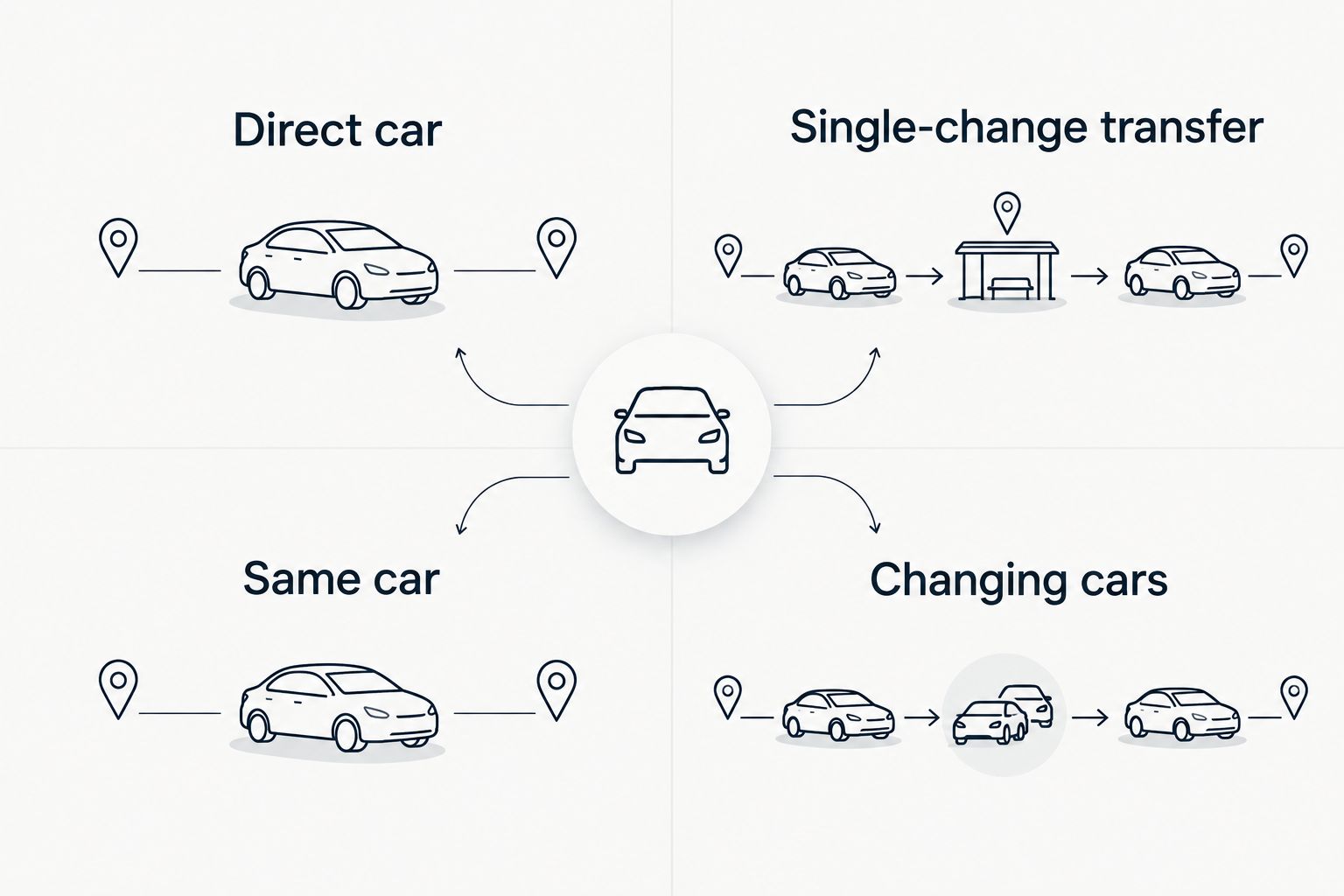
The distinction is simple: direct car means the same car; single-change transfer means changing cars. Neither label cancels border procedures. Decide on the vehicle-change question first, then check the passport-specific entry steps.
Entering Macau at HZMB Macao Port, nationals of visa-free countries may remain in the car with a valid passport. Travelers requiring a Macau visa or Entry Permit clear at the arrival hall or on-board passenger inspection hall, then rejoin the same car.
Bangladesh, Nepal, Nigeria, Pakistan, Sri Lanka and Vietnam passport holders need a Macau visa in advance. When leaving Hong Kong or traveling from Macau to Hong Kong, officers decide the inspection arrangements on the day.
For mainland China journeys, passengers get out at the mainland checkpoint and then rejoin the same car. Do not substitute a Hong Kong–Macau boarding plan for a mainland border plan.
What to confirm before booking in 2026
Start with the passenger, then check the vehicle and booking terms. These details matter more than a broad description such as a seven-seat MPV.
- Boarding: Explain whether the passenger uses a stick, walker or wheelchair, and whether they can transfer into a vehicle seat. Ask what the assigned vehicle can accommodate.
- Passengers and bags: The stated vehicle capacity is up to 6 passengers with 3 large suitcases or 6 small bags. Report mobility equipment separately; do not assume it fits alongside the full luggage allowance.
- Pickup details: Supply the entrance, contact number and any instructions needed to find the passenger.
- Driver details: The driver’s name, phone number and registration plate appear on the My order page no later than 1 hour before pickup.
- Booking terms: Read the cancellation terms and any applicable conditions before payment. Your instant quote is final.
A professional driver booking is a transport arrangement. If the passenger needs lifting, a specific restraint system or another accessibility feature, obtain explicit confirmation rather than inferring it from the vehicle type.
How these options are ranked
The ranking follows journey fit, boarding requirements, vehicle changes, luggage and border steps. It does not rank operators or claim that one format is suitable for every elderly traveler.
A single transfer leads because it answers the simplest itinerary. Hourly hire, airport pickup and cross-border formats follow as distinct choices for different journeys. None overrides the need to confirm the passenger can use the assigned vehicle.
Which private car option should you choose?
Start with point-to-point transport for one Hong Kong journey. Switch to hourly charter for several stops, an airport transfer for flight-linked pickup, or a direct cross-border car when avoiding a vehicle change is important.
A ferry, bridge shuttle bus or taxi remains a separate transport choice. Compare the complete journey, including transport at both ends, boarding and luggage handling. A private car is not automatically the right answer if its boarding arrangement does not suit the traveler.
FAQ
What's the best private car option for an elderly traveler in Hong Kong?
A point-to-point private car is the starting choice for one pickup and one destination. Choose hourly charter for several stops, and confirm the passenger can board the assigned vehicle.
Is a seven-seat MPV wheelchair accessible?
A seven-seat description does not establish wheelchair accessibility. Confirm whether the passenger can transfer into a seat and whether the wheelchair can be carried; do not assume a ramp, lift or wheelchair restraint is included.
How many passengers and bags can a Mayline car carry?
Mayline states a capacity of up to 6 passengers with 3 large suitcases or 6 small bags per car. Declare walking aids or mobility equipment separately so their fit can be checked.
Can an elderly passenger stay in the car between Hong Kong and Macau?
Remaining in the car is not guaranteed throughout the journey. Macau entry procedures depend on passport and entry permission, while officers determine inspection arrangements when leaving Hong Kong or traveling from Macau to Hong Kong.
Is a direct Hong Kong–Macau car better than a single-change transfer?
A direct car is the better fit when avoiding a vehicle change is the priority. A single-change transfer suits travelers who can comfortably get out and board another car at the designated transfer point.
How long is the free waiting allowance for airport pickup?
The airport pickup allowance is 60 minutes from actual landing. Allow for immigration, baggage collection and the passenger's movement to the pickup location when planning the arrival.
How far ahead should I book an elderly passenger's car?
Bookings made 3 or more days ahead have a guaranteed car. For bookings inside 3 days, confirmation is usually within about 5 minutes after payment, or a full refund applies; confirm specific boarding requirements before paying.
One last thing
Write the boarding requirement before the destination when you contact the booking team: whether the passenger can manage a vehicle step, transfer into a seat and fold any mobility equipment. That gives the dispatcher a practical question to resolve, rather than an age alone.
For your 2026 journey, choose the car the passenger can actually board, then choose the booking format that matches the route.